
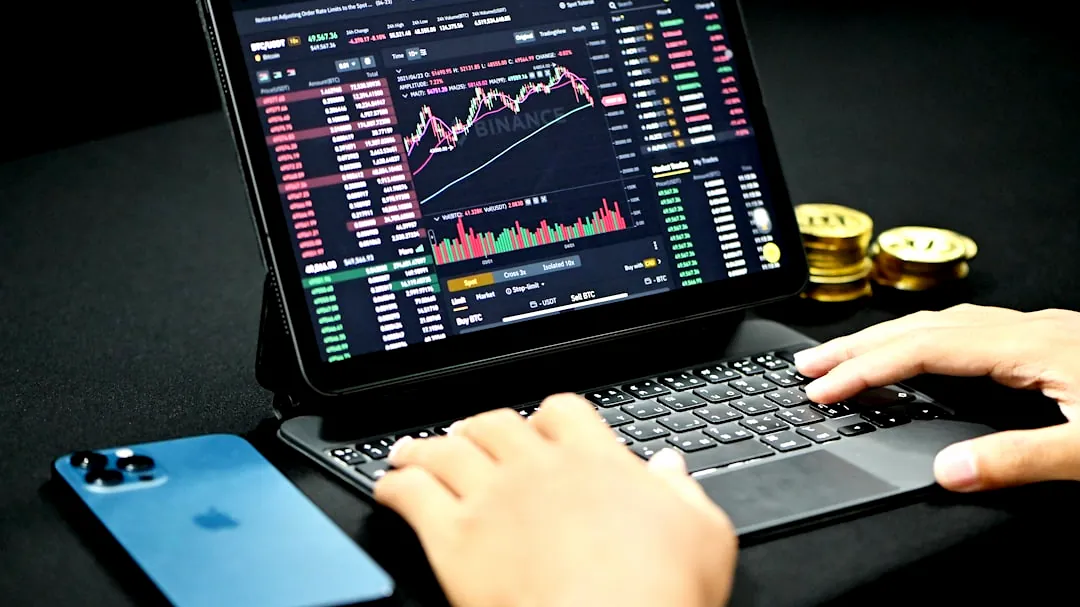
Hyperliquid price predictions for 2026 to 2030 are not pointing to one clean bullish or bearish answer. The gap between forecasts comes from different assumptions about adoption growth, resistance around $32 to $38, and how hard crypto market cycles could interrupt HYPE even if platform usage keeps improving.
What the major HYPE forecasts actually disagree on
CoinCodex, Telegaon, and ChatGPT are not just offering different numbers. They are modeling different paths. CoinCodex sees HYPE peaking near $93.56 in 2026, then correcting to about $51 in 2027 and roughly $38 in 2028 before recovering to $144.66 by 2030. That is a cycle-driven view where strong upside can still include a multi-year drawdown.
Telegaon is more aggressive on adoption translating into price. Its forecast has HYPE moving above $100 in late 2025 and reaching as high as $202 by 2030. ChatGPT sits between those extremes, projecting a steadier climb with $54.87 in 2026, $61.58 in 2027, triple-digit prices by 2029 at $102.68, and around $138 in 2030. That is less about speculative spikes and more about gradual network expansion.
| Forecast source | Key path | What it appears to assume |
|---|---|---|
| CoinCodex | $93.56 in 2026, correction to about $38 in 2028, recovery to $144.66 in 2030 | Strong upside is possible, but crypto cycles and volatility still dominate the medium term |
| Telegaon | Above $100 in late 2025, up to $202 by 2030 | Platform adoption, product differentiation, and token demand stay strong enough to overpower pullbacks |
| ChatGPT | Moderate growth, triple digits by 2029, about $138 in 2030 | Adoption continues, but price appreciation remains more measured than momentum-driven |
Why on-chain strength does not settle the price debate
There is a real fundamental case behind the optimistic forecasts. Hyperliquid has posted all-time highs in trading volume and revenue, with revenue above $993 million. For a market-structure lens, that matters more than vague sentiment because it points to actual usage, fee generation, and a platform that is attracting flow rather than only attention.
That said, strong on-chain metrics do not automatically produce a straight-line token repricing. A market can acknowledge revenue growth while still capping price if traders think adoption is already partly priced in, if liquidity thins during risk-off periods, or if altcoins remain tied to Bitcoin-led cycle behavior. In other words, the fundamentals support a growth case, but they do not remove timing risk.

Telegaon’s more bullish path leans heavily on this adoption story, including Hyperliquid’s product position in decentralized perpetual futures and its consensus design. The more moderate models effectively say the same usage trend can be real without justifying immediate breakout pricing.
The technical constraint that matters more than long-range targets
The most useful near-term checkpoint is not whether HYPE can hit $150 by some distant date. It is whether price can break and hold above the $32 to $38 zone. That range is acting as a meaningful resistance area, and technical readings remain mixed rather than decisively bullish.
RSI is near neutral, and moving averages leave room for short-term weakness. Price action inside a narrowing wedge means the next move could be sharp, but direction still needs confirmation. If HYPE sustains a move above $38, the bullish case gains structure. If it fails there and loses support, downside toward $18 to $21 remains part of the map.
This is where many forecast summaries go wrong. A long-term target above $100 does not cancel the possibility of a deep retracement first. CoinCodex explicitly builds that into its model, while the market itself is still waiting for proof that resistance can be absorbed rather than rejected.
Market structure, liquidity, and trust are the real swing factors
Hyperliquid does not trade in isolation. Its liquidity profile, correlation with Bitcoin and the broader altcoin complex, and sensitivity to derivatives sentiment all affect how quickly price can move away from fundamentals. A token can show strong platform revenue and still suffer outsized drawdowns if market-wide liquidity contracts or if traders rotate out of higher-beta assets.
There is also a trust layer that matters for DeFi-linked assets. Regulatory uncertainty remains a live constraint, and past security-related fears have shown how quickly confidence can break. Allegations around wallet exploits tied to North Korean hackers in late 2024 triggered heavy selling, even though Hyperliquid Labs denied any breach. For HYPE, confidence shocks can interrupt adoption-driven narratives faster than most long-range models account for.

How to read these predictions without turning them into signals
The practical distinction is simple: forecasts are scenario maps, not trade confirmations. Telegaon’s path is useful if you believe adoption and product differentiation will keep compounding. CoinCodex is useful if you think crypto cycles can impose a major correction even during growth. ChatGPT’s path is useful if you expect steady expansion without a mania phase.
The next checkpoint is concrete. Watch whether HYPE can break and sustain above $32 to $38 while on-chain activity remains strong. If that happens, the bullish forecasts start to look less like narrative and more like a market structure shift. If not, lower support levels and a slower timeline remain the more disciplined read.
Q&A
Does strong revenue mean HYPE price must rise?
No. Revenue and volume support the fundamental case, but price still depends on resistance levels, liquidity conditions, and broader crypto risk appetite.
Is a triple-digit HYPE price unrealistic?
Not according to the forecasts in circulation. The disagreement is less about whether triple digits are possible by 2030 and more about whether HYPE gets there smoothly or only after a major correction.
What is the most important level to watch now?
The $32 to $38 zone. A sustained break above it would strengthen the bullish setup, while rejection there keeps downside risk toward $18 to $21 in play.
About the Author