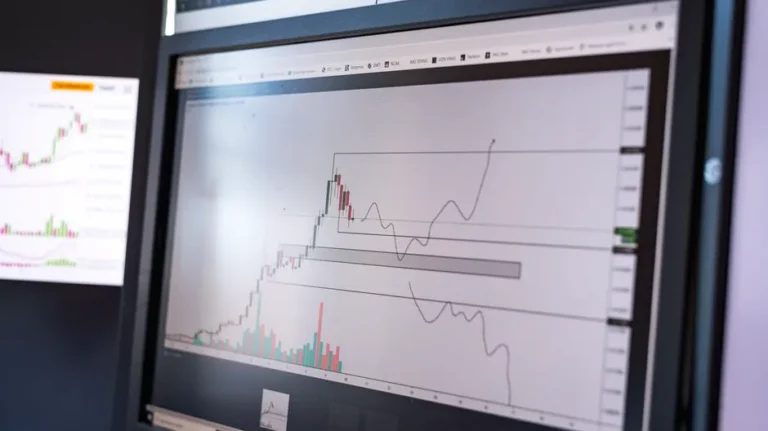

Bitcoin is currently hovering around the critical price level of $68,400, a point that has captured the attention of traders and investors alike. This situation is significant as it not only represents a psychological barrier but also correlates with Bitcoin’s 200-week exponential moving average (EMA), a pivotal technical indicator that can influence market sentiment.
What happened
Bitcoin’s price has reached a crucial juncture at the $68,400 mark, a level that traders are closely monitoring. This threshold is not merely a number; it signifies a potential turning point in the cryptocurrency market. The current volatility in the market adds to the importance of this price level.
As Bitcoin approaches this pivotal point, traders are weighing their options, knowing that the outcome could significantly impact market dynamics. The price action around this level is indicative of broader trends and investor sentiment.
The implications of Bitcoin’s movements at this price level could resonate throughout the cryptocurrency landscape, affecting not just individual traders but also institutional investors looking for stability.
Why it happened
The significance of the $68,400 level is rooted in its historical role as a support level, particularly in relation to the 200-week EMA. This technical indicator has historically provided a safety net for Bitcoin’s price, influencing traders’ decisions and market psychology.
Traders are acutely aware that if Bitcoin can maintain this level, it may foster a sense of confidence among investors. Conversely, a dip below this threshold could trigger a wave of selling, as traders rush to cut losses.
This dynamic illustrates the intricate relationship between technical indicators and market psychology, where the perception of risk can drive trading behavior in real time.
How it works
The 200-week EMA serves as a smoothing mechanism for Bitcoin’s price fluctuations, providing insights into long-term trends. Traders often rely on this indicator to gauge potential support and resistance levels.
When Bitcoin approaches the 200-week EMA, it can create a psychological barrier for investors. A successful retest of this level can lead to increased buying pressure, while a failure may result in heightened selling activity.
Understanding how this technical indicator functions is crucial for traders as they navigate the complexities of the cryptocurrency market.
What changes
If Bitcoin can consistently bounce off the $68,400 level, it may attract institutional investors seeking signs of stability. This influx of institutional capital could enhance Bitcoin’s credibility as a store of value, potentially leading to a bullish trend.
On the other hand, a drop below this critical level could deepen skepticism among traditional investors. This scenario could perpetuate a cycle of distrust, hampering Bitcoin’s growth and acceptance in mainstream finance.

The potential for further decline highlights the risks associated with over-leveraging, as traders may gamble on a rebound without fully considering the broader market context.

Why it matters next
The outcomes of Bitcoin’s price action around the $68,400 threshold will likely have far-reaching implications for the cryptocurrency market. As regulations evolve and macroeconomic conditions shift, these factors will play a vital role in shaping Bitcoin’s trajectory.
Understanding these dynamics is essential for anyone involved in cryptocurrency trading, as they influence perceptions of risk and reward. The interplay between market psychology and external influences will continue to shape trading strategies and market trends.
Ultimately, the situation surrounding Bitcoin’s price at this critical level serves as a reminder of the complexities inherent in the cryptocurrency market.
What are the risks associated with Bitcoin trading?
Traders face various risks, including market volatility and the potential for significant losses if prices move against their positions. Over-leveraging can exacerbate these risks, leading to rapid declines in capital.
How can investors navigate market volatility?
Investors can navigate volatility by employing sound risk management strategies, such as setting stop-loss orders and diversifying their portfolios. Staying informed about market trends and external factors is also crucial for making informed decisions.
About the Author