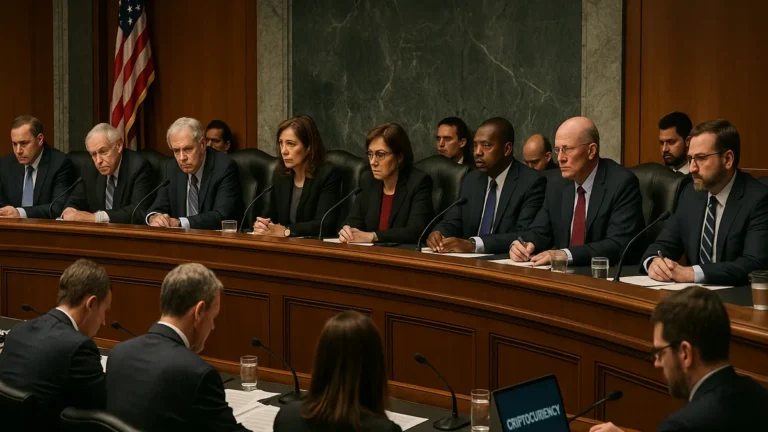

A Buenos Aires court has ordered a nationwide block of Polymarket, and the key point is narrower than a simple anti-crypto reading: the ruling targets an unlicensed prediction market that regulators say combined gambling-law violations, weak user safeguards, and suspicious trading tied to sensitive economic data.
The March 16 order and who must enforce it
On March 16, 2026, Judge Susana Parada ordered Argentina’s telecom regulator ENACOM to block access to Polymarket across the country and directed Google and Apple to remove the app from their Argentine stores. The case moved beyond a local dispute because the order applies nationally and reaches both internet access providers and major mobile distribution channels.
The complaints came from Buenos Aires gambling regulator LOTBA and the Chamber of Casinos, which argued that Polymarket was operating as a betting platform without the licenses required under Argentine gambling law. That distinction matters for market structure: this was not a court trying to classify all crypto activity as illegal, but a court treating one platform’s event contracts as unauthorized wagering offered into the local market.
Why the inflation contract became the catalyst
The enforcement push accelerated after trading on a Polymarket contract tied to Argentina’s February 2026 inflation reading spiked shortly before the official release. Roughly 20 minutes before INDEC published the 2.9% figure, volume on the contract predicting that exact outcome climbed to nearly $91,000, raising suspicions that non-public data may have leaked into the market.
That episode changed the case from a licensing argument into a user-protection and market-integrity problem. A prediction market already operating outside local authorization is one issue; a market that may also be pricing in leaked government data is another. For regulators, that creates a stronger basis to intervene because the concern is no longer only whether users can place bets, but whether the venue can become a channel for trading on privileged information with little traceability.

What regulators focused on beyond the crypto label
Authorities said Polymarket allowed rapid account creation without identity or age verification, which in their view made it too easy for minors to participate and too hard to apply the controls expected in regulated gambling or financial venues. The draft record also points to payments through cryptocurrencies and credit cards without the oversight local regulators expect from licensed operators.
That is the part often lost in broad commentary about crypto speculation. Argentina’s action lines up more closely with a crackdown on unlicensed market access and compliance gaps than with a blanket rejection of blockchain-based products. The comparison with the United States is useful here: platforms such as Kalshi operate under Commodity Futures Trading Commission oversight, while Polymarket has faced restrictions in multiple jurisdictions where it lacked a recognized licensing path or consumer-protection compliance.
Argentina joins a wider Latin American and global pattern
Argentina now follows Colombia in imposing a full national ban on Polymarket, joining a list of more than 30 countries that have restricted the platform over licensing and consumer-protection concerns. That regional sequence is a stronger signal than any single headline because it suggests Latin American authorities are converging on a common view: offshore crypto prediction markets cannot assume they will be treated as neutral information venues if they resemble gambling products in practice.
For traders and operators, the useful distinction is between narrative and signal. The narrative says governments are moving against crypto markets generally. The stronger signal is narrower and more actionable: regulators are increasingly willing to block platforms that offer event contracts into local jurisdictions without licensing, KYC, age checks, and a defensible response to market-abuse risk.
| Checkpoint | What is already verified | Why it matters for the market |
|---|---|---|
| Court ruling | Judge Susana Parada ordered a nationwide block on March 16, 2026 | This is not a warning shot; it is an enforceable national action |
| Distribution controls | Google and Apple were told to remove the app from Argentine stores | Access pressure extends beyond the website to app onboarding and retention |
| Abuse trigger | Nearly $91,000 traded on the 2.9% inflation contract before INDEC’s release | The case now includes possible insider-information concerns, not just licensing |
| Enforcement path | ENACOM is expected to use DNS and IP blocking, including against mirror access | Previously installed apps and alternate routes may still be targeted |
The next real checkpoint is enforcement quality, not commentary
What matters next is how ENACOM implements the order in practice. DNS and IP blocking are expected, and the ruling is described as broad enough to cover mirror sites and users who already had the app installed. If that rollout is aggressive and coordinated with internet service providers, the Argentine market could become a test case for how far Latin American regulators can push technical restrictions on cross-border crypto applications.
There is also a policy question behind the block: whether regulators stop at prohibition or move toward a licensing framework for other prediction platforms. If future guidance focuses on KYC, AML, age verification, and local authorization, that would indicate the issue is market design and accountability. If no such path appears, operators should assume the region will remain structurally hostile to offshore event markets that try to enter first and negotiate later.
Short Q&A
Does this mean Argentina is banning crypto trading generally?
Nothing in this ruling suggests a general ban on crypto. The order is directed at Polymarket as an allegedly unlicensed betting platform with added market-abuse concerns.
Can users still access Polymarket through old installs or mirror links?
The expected enforcement path is meant to cover more than the main website, including previously installed apps and mirror access points, though the practical effectiveness will depend on ENACOM’s implementation.
What is the most important signal for other crypto prediction markets?
Local licensing status and basic controls now look central. Platforms offering fast access without KYC, age checks, or a clear compliance perimeter are the most exposed.
About the Author