
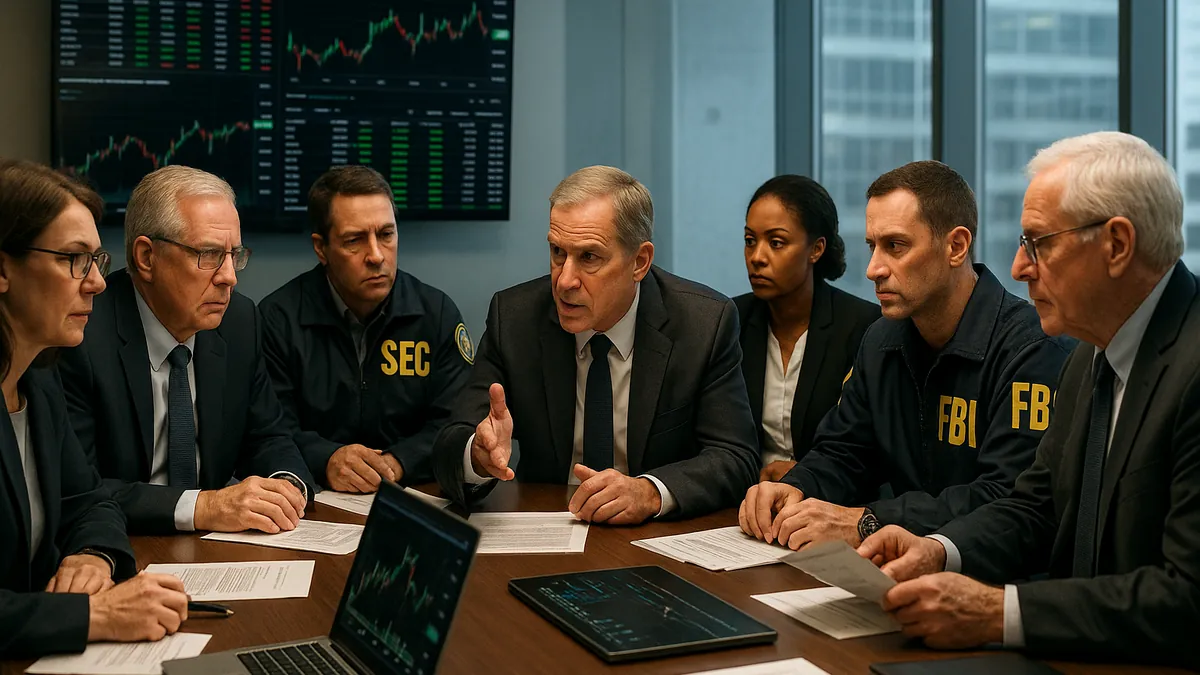
Margaret Ryan’s resignation after only six months as the SEC’s enforcement director is not a routine personnel change. It points to a more important shift for crypto markets: enforcement risk now depends not only on the facts of a case, but also on internal SEC approval politics, leadership priorities, and outside pressure around politically sensitive firms.
Ryan’s exit followed disputes over how hard to press crypto-linked cases
According to the draft record, Ryan clashed with SEC Chair Paul Atkins and other senior officials over how aggressively the agency should pursue fraud and misconduct allegations. The sharpest disagreements reportedly involved Justin Sun and Elon Musk, two names that carried very different fact patterns but a similar internal question: whether the SEC should press harder when a case becomes politically charged or high profile.
Ryan favored a tougher line, including fraud charges against Sun, who recently settled fraud allegations, and stronger claims tied to Musk’s disclosure issues in his stock acquisition activity. Leadership pushed back. That matters because it shows the divide was not abstract or philosophical; it was attached to named matters where charging decisions, settlement posture, and public signaling could materially affect how the market reads the SEC’s appetite for crypto-related enforcement.
Oversight has shifted from staff discretion to commissioner control
Under Atkins, enforcement staff now need commissioner approval before opening formal investigations. That procedural change is more than a management preference. It slows the start of cases, raises the threshold for staff to pursue complex matters, and gives political leadership more direct control over which crypto investigations ever become formal actions.

For market participants, that creates a practical difference between narrative and signal. The narrative is that the SEC remains active because it still talks about fraud and investor protection. The signal is that case initiation itself has become more centralized, which can reduce speed in fast-moving digital asset matters where wallet activity, offshore structures, exchange coordination, and promotional campaigns often require rapid escalation. A regulator can sound tough while still becoming slower and more selective at the file-opening stage.
Crypto compliance has lost priority while traditional fraud regains ground
The agency’s current emphasis has shifted away from some crypto compliance actions and toward traditional fraud and market manipulation enforcement. That does not mean crypto is off the board. It means the SEC appears less interested in treating digital assets as a standalone enforcement campaign and more inclined to intervene where conduct fits older, clearer fraud frameworks.
This distinction matters for liquidity and project-specific risk. Tokens, platforms, and promoters facing disclosure, registration, or market-structure questions may see a different enforcement environment than actors accused of straightforward deception or manipulation. In other words, the bar may be moving from “is this crypto activity noncompliant?” toward “can this be framed as classic fraud with a cleaner litigation path?” That narrows some headline risk while preserving danger for projects with concentrated insider control, questionable treasury movements, promotional exaggeration, or suspicious trading patterns.
The draft also points to outcomes that have reinforced this perception, including crypto cases against Justin Sun and Binance founder Changpeng Zhao being dismissed or resolved with relatively limited penalties. Whether each case is judged individually or not, the market will treat that pattern as evidence that current SEC leadership is recalibrating where it wants to spend enforcement capital.
Blumenthal’s inquiry makes political influence part of the enforcement analysis
Senator Richard Blumenthal has requested records tied to SEC communications with crypto firms linked to the Trump family, including World Liberty Financial, which the draft identifies as backed by Justin Sun. That inquiry introduces a separate layer of risk: even if the SEC softens or delays certain crypto actions, congressional scrutiny can keep politically connected matters alive and raise the cost of perceived favoritism.
That is why Ryan’s departure should not be read narrowly as an HR event. If the enforcement director leaves after disputes over named crypto-linked matters, while a U.S. senator probes agency communications involving firms with political connections, then future case selection itself becomes part of the story. For issuers, exchanges, and investors, the relevant question is no longer just whether a project has exposure to SEC rules. It is also whether the case sits at the intersection of digital assets, prominent individuals, and administration-era political sensitivities.
The next real checkpoint is not rhetoric but who replaces Ryan and what powers they get
The clearest next signal will be the appointment of Ryan’s successor and whether the commissioner-approval bottleneck remains intact, loosens, or tightens further. A replacement with a litigation-first background and a mandate to reopen aggressive crypto investigations would mean something very different from a consensus manager operating under the same constrained process.
For now, readers should separate two things. Public statements that the SEC still enforces the law are not enough on their own. The stronger indicators are operational: how quickly formal investigations are opened, whether crypto cases are framed as compliance failures or fraud, and whether politically sensitive matters continue to stall. Those are the markers that will tell the market whether this resignation leads to a structural change in crypto enforcement or simply confirms one already underway.
About the Author