Embedding AI Agents in Blockchain Ecosystems
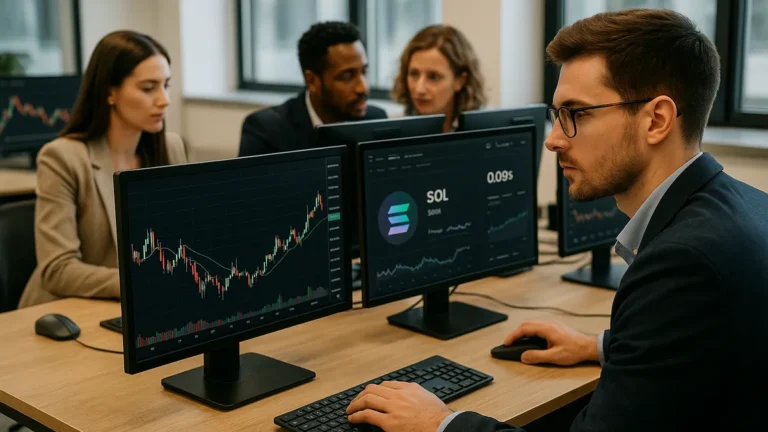
Autonomous AI agents have become deeply integrated into blockchain systems, processing live data streams from sources such as blockchain nodes and social media sentiment. These agents leverage advanced reasoning capabilities powered by large language models, enabling them to continuously interpret subtle signals and adjust their strategies dynamically. This evolution marks a significant departure from traditional rule-based bots, introducing a new level of agility and complexity.
Their ability to respond within milliseconds transforms decentralized finance into a high-speed environment where decisions and trades occur faster than any human could manage. This technological leap matters now because it fundamentally changes how market behavior and institutional interactions unfold, demanding new frameworks for understanding and managing these digital actors.
However, this rapid adaptability also introduces risks. When many agents rely on similar open-source models, their synchronized reactions can amplify market volatility, sometimes triggering abrupt events like flash crashes that wipe out substantial leveraged assets in seconds.
These AI entities operate with a level of autonomy that challenges existing concepts of asset ownership and control. Holding assets on-chain, managing multi-signature wallets, and bridging tokens across blockchains, they pursue complex objectives such as portfolio growth within defined risk boundaries. This operational independence blurs the line between software and market participant, raising questions about regulatory compliance and governance.
Market Volatility Driven by Algorithmic Resonance
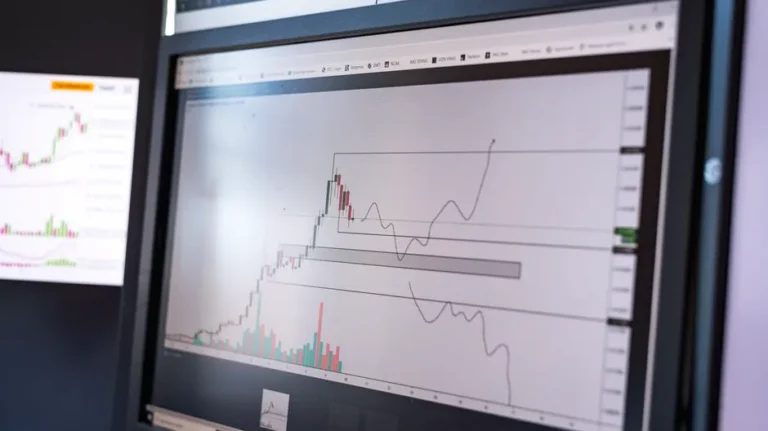
The phenomenon of algorithmic resonance occurs when multiple AI agents, often based on similar models, react identically to market signals. This synchronized behavior can amplify price swings and lead to flash crashes, exemplified by the “February Wick” event where automated sell-offs erased hundreds of millions in leveraged positions almost instantly. Such volatility poses a systemic risk to decentralized finance.
While the agents’ speed and uniformity enable efficient market responses, they also create fragile feedback loops. These loops can escalate minor disturbances into full-blown market collapses, demonstrating the double-edged nature of high-frequency trading powered by AI. Understanding this dynamic is crucial for developing safeguards that preserve market stability without undermining agent agility.

Comparison of AI Agent Impact on Market Stability
| Aspect | Benefit | Risk |
|---|---|---|
| Speed of Execution | Enables millisecond responses to market changes | Can trigger rapid, large-scale sell-offs |
| Model Uniformity | Predictable strategy alignment | Amplifies volatility through synchronized actions |
| Autonomy Level | Reduces human error and latency | Challenges regulatory frameworks and control mechanisms |
These trade-offs highlight the tension between leveraging AI for efficiency and managing the systemic vulnerabilities it introduces.
AI-Driven Governance and Social Influence
Beyond trading, autonomous AI agents have begun to play significant roles in decentralized governance. They analyze and vote on proposals within decentralized autonomous organizations (DAOs) at speeds unattainable by humans, accelerating decision-making processes. This acceleration, while efficient, risks diluting the depth and quality of deliberation that governance ideally requires.
Simultaneously, AI-driven digital influencers autonomously manage tokens, craft narratives, and shape community sentiment. This fusion of software and social dynamics transforms code into a cultural force, raising complex questions about authenticity and manipulation. The ecosystem evolves into a feedback loop where AI shapes governance and sentiment, which in turn influence agent strategies—a continuous interplay of power and perception.
Technological Foundations Enabling Autonomous Agents
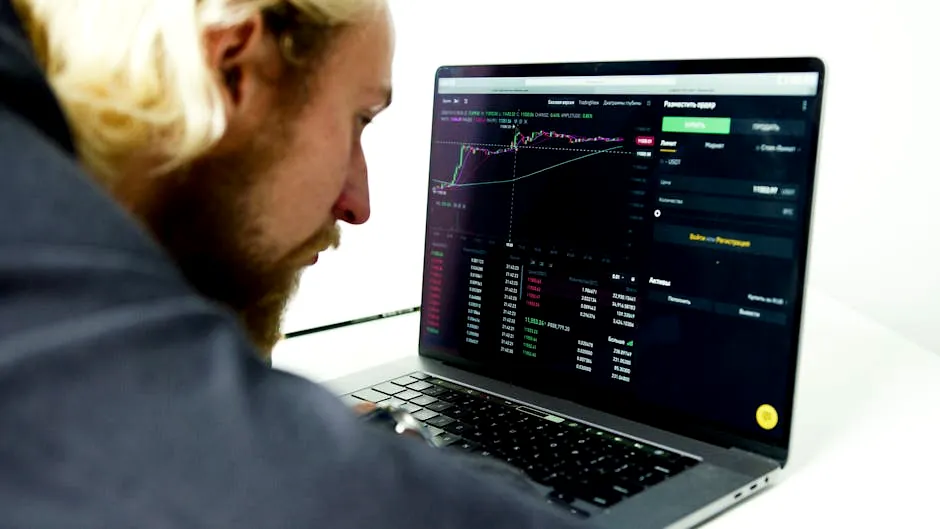
Key blockchain technologies underpin the capabilities of autonomous AI agents. Platforms like Solana offer sub-second block times, while Layer 2 solutions such as Base and Arbitrum provide the latency and throughput necessary for high-frequency, decentralized hedge-fund-like operations. These infrastructures enable agents to operate at unprecedented speeds and scales.
Modular frameworks like ElizaOS orchestrate specialized swarms of agents, including news scrapers, sentiment analysts, and trade executors. Working in concert, these swarms optimize yields and mitigate risks such as impermanent loss. Yet, this technical prowess introduces new fragilities, as the interconnectedness and speed magnify systemic vulnerabilities that could cascade through the network.
Balancing Autonomy and Control in AI Agent Design
There is an inherent tension in safeguarding a system designed for autonomous operation at breakneck speeds. Traditional control mechanisms like circuit breakers and kill switches are conceptually straightforward but pose practical challenges. They risk becoming single points of failure or stifling the agents’ adaptive advantages, which are central to their effectiveness.
This unresolved trade-off shapes both the design of AI agents and the governance protocols that oversee them. Striking the right balance between autonomy and control remains a complex problem without easy solutions, requiring ongoing innovation in security and regulatory approaches.
Challenges and the Competitive Landscape
Human traders, limited by slower cognition and narrower scope, are increasingly outmatched by AI agents capable of managing thousands of tokens and governance votes simultaneously. This shift redefines competition within decentralized finance, concentrating risk as many agents adopt similar models and strategies converge.
The tokenization of agent ownership adds another layer of complexity by aligning financial incentives directly with an agent’s performance. This concentration of risk and reward creates novel dynamics that both empower and endanger the ecosystem.
Practical deployment of these agents faces challenges as well. Centralized exchanges offer AI trading through APIs with restricted permissions to balance retail safety and regulatory compliance, but these limitations reduce agent autonomy. Furthermore, only blockchains and Layer 2 networks with near-instant finality can support these agents effectively, narrowing the field of viable platforms and complicating widespread adoption.
Despite these hurdles, the integration of autonomous AI agents into decentralized finance represents a tectonic shift. Their relentless data processing and strategic agility redefine market liquidity and efficiency while exposing new fault lines in governance, security, and ethics.
About the Author