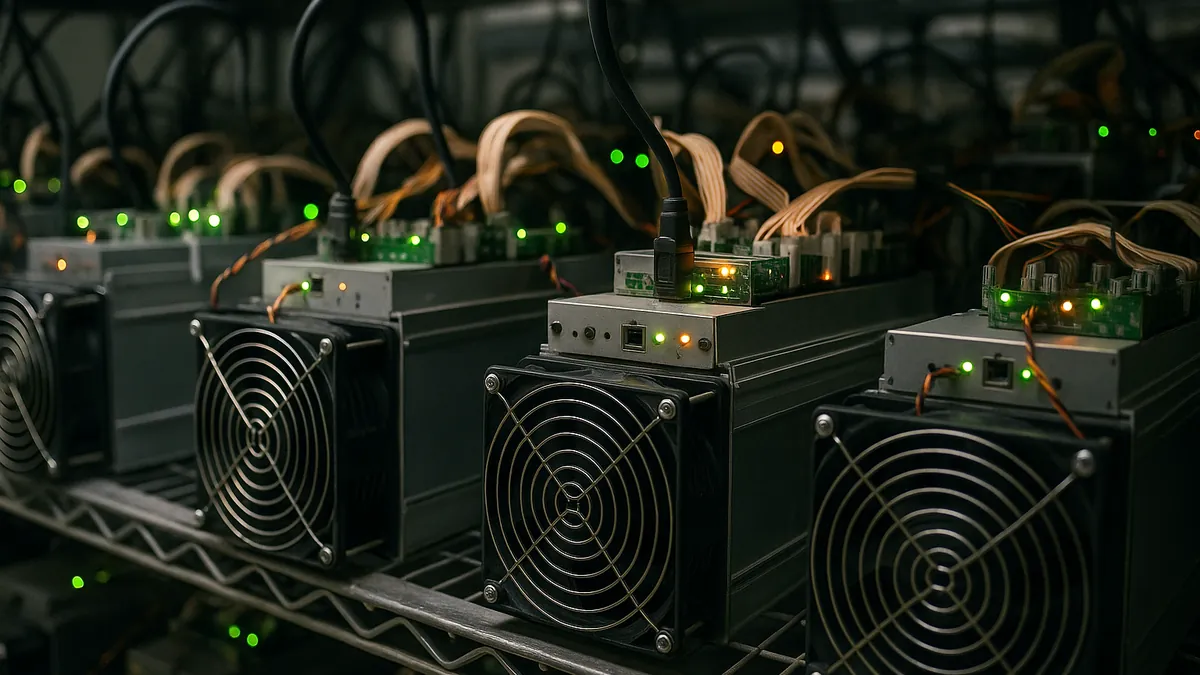
A solo Bitcoin miner just found a block through CKPool and earned 3.139 BTC, roughly $210,000 including fees, but the useful signal is not that solo mining is back. The real takeaway is that even a win at around 230 TH/s still sits inside very poor odds in a network where difficulty briefly fell, then rebounded, and large operators continue to control the economics.
One rare win, not a change in the base rate
CKPool administrator Con Kolivas said the miner’s hashrate was about 230 TH/s, which translated to roughly a 1-in-28,000 daily chance of finding a block at that scale. That is why the result matters as an illustration of Bitcoin’s permissionless design, but not as evidence that an individual miner can now compete consistently with industrial fleets.
The recent block was unusual even within the already narrow category of solo mining. Over the last 12 months, solo miners found only 20 Bitcoin blocks in total, earning 62.96 BTC, with an average of one solo block every 18.7 days; the previous dry spell stretched to 58 days, and the last solo success before this one was on February 28, 2026.
CKPool’s own history reinforces the same point. Since 2014, the pool has recorded 305 solo blocks, which sounds substantial until it is set against more than a decade of rising network competition and the scale now deployed by public and private mining companies.
The difficulty dip helped at the margin, then mostly disappeared
Bitcoin mining difficulty recently posted its steepest downward adjustment since February 2026, falling 7.7% before rebounding 3.87% within 24 hours. That short window modestly improved block-finding odds for everyone, including solo miners, but it did not alter the broader structure because difficulty remains close to all-time highs.
That distinction matters for readers trying to separate signal from narrative. A temporary decline in difficulty can improve expected economics for a few days, especially if weaker machines come offline, but near-record difficulty still means that sustained solo profitability remains unlikely unless a miner controls far more hashpower than most individuals can finance.

CoinWarz data has shown the longer trend clearly: difficulty has risen by orders of magnitude over the past decade, with only brief resets when inefficient rigs are shut down or redirected. In practice, that means a lucky solo block can happen during a softer patch without changing the fact that the network still rewards scale, energy access, and uptime discipline.
Why capital-heavy miners still set the market structure
Mining economics are tightening even for the biggest operators, which is one reason this solo win should not be mistaken for a broad opening for smaller players. Riot Platforms sold 3,778 BTC in Q1 2026, while MARA Holdings sold more than 15,000 BTC and cut 15% of its workforce as it moved toward steadier business lines.
Those sales are a liquidity signal. If listed miners with large infrastructure footprints are selling treasury Bitcoin to manage debt, fund operations, or reduce stress, then the constraint on hobby-scale miners is not just luck; it is access to cheap power, financing, hardware refresh cycles, and the ability to survive long stretches without block rewards.
Large mining firms also operate with exahash-scale capacity distributed across multiple sites and jurisdictions, including the U.S., Kazakhstan, and China-linked supply chains and hosting ecosystems. That geographic and operational spread does not remove risk, but it gives institutions options that a solo miner with a few machines or a hosted setup usually does not have when difficulty rises or margins compress.
What the numbers say a solo miner is really choosing
CKPool’s solo model lets users point hashpower without joining a conventional reward-sharing pool, so the upside is straightforward: if a block is found, the miner keeps the entire reward rather than splitting it. The trade-off is variance, and at today’s difficulty that variance is the story.
| Checkpoint | What the recent data suggests | Practical read-through |
|---|---|---|
| Recent solo block | 3.139 BTC reward, about $210,000, found at roughly 230 TH/s | A real payout, but driven by low-probability variance rather than a structural change |
| Odds at that scale | About 1 in 28,000 per day, according to Con Kolivas | Most individual miners should treat solo mining as high-variance exposure, not stable income |
| Difficulty changes | Down 7.7%, then up 3.87%, still near highs | Short-term relief can improve odds briefly, but does not solve the scale problem |
| Large-miner behavior | Riot and MARA sold significant BTC in Q1 2026 | Sector liquidity pressure is still active, even among operators with much better economics than hobbyists |
The checkpoint from here is not whether another solo miner gets lucky next week. It is whether future difficulty adjustments stay soft enough, and network hashrate shifts enough, to meaningfully improve block odds; at the same time, continued Bitcoin sales by institutional miners would indicate that the industry’s balance-sheet pressure is still forcing behavior despite occasional headline wins.
Short Q&A for readers tempted to extrapolate
Does this mean solo mining is economically viable again?
No. It means solo mining is still possible, but the current network structure makes regular success extremely unlikely for most individuals.
Did the 7.7% difficulty drop materially change the picture?
Only briefly. It improved conditions at the margin before a 3.87% rebound, and difficulty remains near historic highs.
What is the cleaner market signal to watch next?
Watch future difficulty adjustments alongside miner treasury sales. If hashrate weakens and forced selling continues, that says more about mining economics than a one-off solo block.
Why does the Riot and MARA selling matter here?
Because it shows that even large operators are managing liquidity under pressure. If institutions with scale are selling Bitcoin to support operations, small miners face an even harsher operating environment.
About the Author