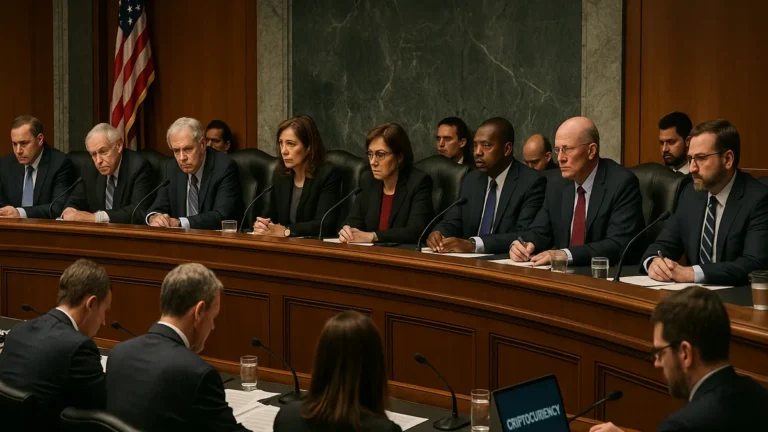

Operation Atlantic matters because it is not a broad anti-fraud campaign dressed up with crypto language. It is a coordinated U.S.-UK-Canada effort aimed at one specific wallet-draining mechanism: approval phishing, where victims are tricked into authorizing access that lets attackers empty funds in transactions that generally cannot be reversed.
Why the target matters: wallet approvals are the attack surface
The operation is led by the U.S. Secret Service and includes the UK’s National Crime Agency, the Ontario Provincial Police, and the Ontario Securities Commission. Other participating agencies named in the effort include the RCMP, City of London Police, the U.S. Attorney’s Office for D.C., and the UK Financial Conduct Authority. That lineup is important because approval phishing crosses both criminal and regulatory boundaries: it starts with deception, ends with on-chain theft, and often spans multiple jurisdictions before victims understand what they signed.
The scam itself is narrower and more technical than a typical “crypto scam” label suggests. Victims see fake alerts, pop-ups, or prompts that appear to come from a trusted wallet, app, or service. Instead of handing over a seed phrase, they approve a malicious permission. Once that approval is granted, the attacker can move assets out of the wallet, and the practical odds of reversal are low enough that response speed becomes central rather than optional.
From Project Atlas to real-time disruption
Operation Atlantic builds on Project Atlas, the 2024 initiative that disrupted $70 million in fraud and identified more than 2,000 compromised wallets. The distinction is not just scale. The stated emphasis here is near real-time disruption, along with victim education and recovery assistance, which suggests an effort to intervene while malicious approvals are still producing thefts rather than relying mainly on post-loss investigation.

That is the operational change worth tracking. Approval phishing is dangerous because the theft mechanism is immediate once permission exists, and criminals can route assets quickly across services and borders. A multinational structure gives investigators and securities regulators a better chance to share intelligence, warn victims faster, and coordinate with service providers before stolen funds are fully dispersed. Whether that works at scale is still an open question, but it is a more targeted response than general awareness campaigns or delayed enforcement actions.
What is supported, and what is still narrative
There is solid support for two claims. First, this is a cross-border enforcement model built for a cross-border fraud problem. Second, it is specifically focused on approval phishing, not just crypto fraud in the abstract. The presence of both police bodies and securities regulators, including the Ontario Securities Commission and the UK FCA, fits that narrower reading because victims often need both investigative response and investor-protection guidance.
What is not yet supported is any broad conclusion that this materially changes crypto fraud economics on its own. The draft references scam revenues reaching at least $14 billion in 2025 and notes that ETF launches and corporate Bitcoin accumulation continue to bring in mainstream attention. Those trends may increase the number of potential targets, but they do not prove that Operation Atlantic will substantially reduce total scam volume. The real test is more specific: whether real-time intervention lowers the velocity of approval-phishing thefts and whether recovery can happen often enough to matter beyond isolated cases.
Where to look for signal over the next few months
Readers trying to separate enforcement signal from headline narrative should focus on measurable checkpoints rather than the announcement itself. The operation will be more meaningful if agencies start showing shorter times between wallet compromise, victim contact, and disruption, or if they publish evidence of recoveries linked to coordinated intervention. If updates stay limited to warnings and educational messaging, that would imply a weaker operational effect than the framing suggests.
| Checkpoint | Why it matters | What would count as weak evidence |
|---|---|---|
| Time to intervention | Approval phishing damage compounds quickly after a malicious permission is granted. | Only retrospective case summaries with no indication of how fast agencies acted. |
| Compromised wallets identified | Shows whether monitoring and detection are improving beyond public advisories. | No wallet-level figures comparable to Project Atlas. |
| Recovery outcomes | Tests whether disruption translates into actual financial relief for victims. | Education and warnings without reported asset recovery or seizure results. |
| Private-sector coordination | Attackers exploit exchange, wallet, and jurisdiction gaps; enforcement alone is slower. | No evidence of integrated work with platforms or service providers. |
Practical reading for investors and compliance teams
For investors, the immediate implication is simple: treat wallet approval prompts as a higher-risk event than many people still do. Operation Atlantic’s focus is a reminder that the most expensive losses do not always come from private-key theft; they can come from signing what looks like a routine request. Victims are being directed to official resources from agencies in the U.S., UK, and Canada for guidance on compromised wallets, and speed matters if an approval has already been granted.
For compliance and market-structure watchers, the more interesting implication is institutional. As spot crypto products, corporate treasury activity, and mainstream user onboarding continue, enforcement is becoming more specialized rather than merely louder. Operation Atlantic is evidence of that shift only if it produces repeatable real-time disruption across borders. If not, it remains a useful but limited pilot against one fraud technique.
Short Q&A
Is this a broad crypto enforcement sweep?
Not based on the announced scope. The named focus is approval phishing scams that abuse wallet permissions.
Why involve securities regulators as well as police agencies?
The scams affect investors directly, and regulators can support investor protection, warnings, and coordination alongside criminal investigations.
What is the next concrete sign of success?
Evidence that interventions are happening quickly enough to stop ongoing thefts and that some stolen funds are being recovered, not just documented after the fact.
About the Author