
Bhutan’s latest Bitcoin transfer was not a routine wallet shuffle. On March 25, 2026, Druk Holding and Investments moved 519.7 BTC, worth about $36.75 million, to wallets linked to Binance and QCP Capital, extending a sovereign sell-down that now looks clearly tied to funding domestic infrastructure rather than passive treasury management.
March 25 adds to a long, measured unwind
The new transfer fits a pattern that has been visible for months: Bhutan has been reducing its Bitcoin stock in deliberate tranches rather than in one-off emergency sales. Since October 2024, its holdings have dropped from more than 13,000 BTC to roughly 4,453 BTC, a decline of more than 60%.
That pace matters because it argues against the common misread that these are simple custody rotations or generic portfolio rebalancing. Repeated outflows in the roughly $30 million to $70 million range point to a planned monetization program, with sales sized to raise cash while limiting market disruption.
Why Bhutan’s reserve is different from most institutional Bitcoin treasuries
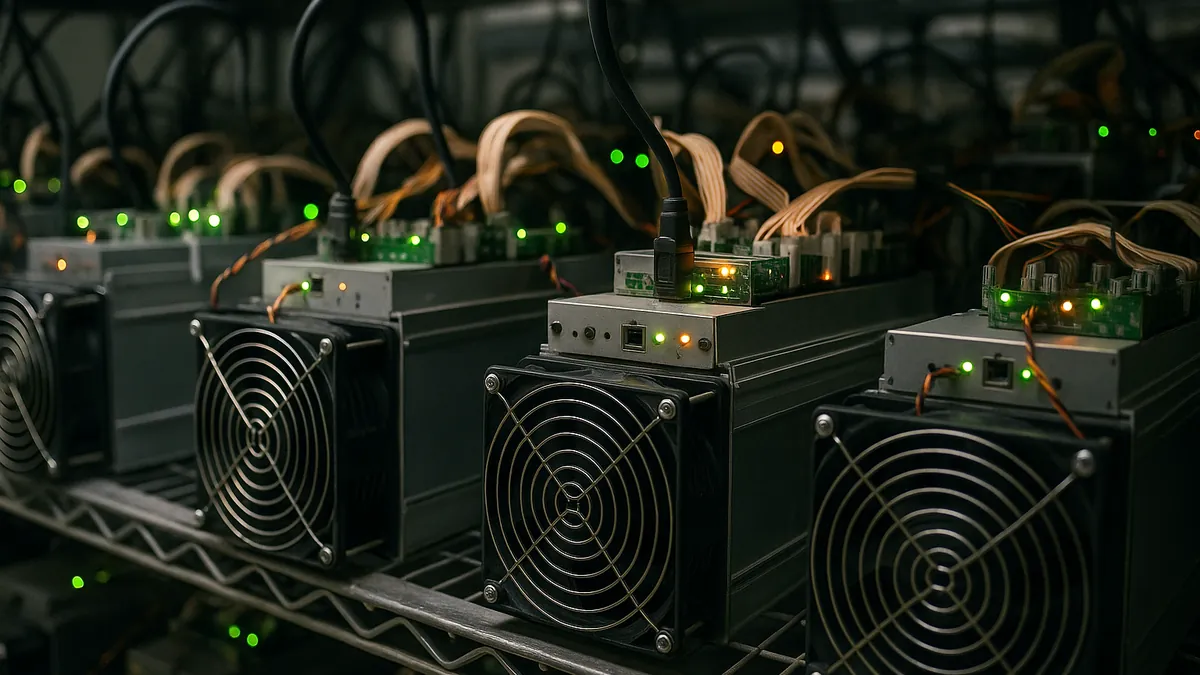
Bhutan did not build this position by buying spot Bitcoin in the market the way corporates or ETFs do. The reserve was accumulated through industrial-scale mining powered by the country’s hydroelectric resources, which means the sovereign fund’s effective Bitcoin cost basis is close to zero apart from mining and infrastructure expense.
That difference changes the economic logic of the sell-off. For a buyer with a high entry price, liquidation may reflect risk reduction or balance-sheet stress; for Bhutan, selling mined coins is closer to harvesting accumulated state revenue. The absence of fresh inflows for more than a year, especially after the 2024 halving, also suggests the country is no longer replacing what it sells at the same rate, so this is an unwind of a finite reserve rather than a revolving treasury operation.
Binance and QCP show two separate liquidity paths
The destinations of the March 25 transfer give the clearest signal about execution. Coins sent to QCP Capital, a Singapore-based institutional trading firm, likely support OTC liquidation or hedging, while coins sent to Binance deposit addresses more likely indicate immediate selling, collateral use, or preparation for exchange-based execution.
| Destination | Likely function | What it signals |
|---|---|---|
| QCP Capital | OTC block sale, structured liquidation, or hedging | Focus on minimizing visible market impact and sourcing institutional liquidity |
| Binance | Exchange sale, collateralization, or near-term execution | Higher immediacy of monetization than a custody-only transfer would imply |
For market structure, that split matters more than the headline size. OTC routing can soften direct order-book pressure, while exchange deposits can introduce more visible supply, so the mix between those channels is a better read on likely market impact than raw BTC outflow alone.
Gelephu turns the sales into a capital-allocation story
The most plausible use of proceeds remains Bhutan’s Gelephu Mindfulness City project, which had originally been associated with a 10,000 BTC funding commitment. With reserves now near 4,453 BTC, that original scale looks difficult to maintain unless Bhutan slows sales for budget reasons, resumes meaningful mining accumulation, or acquires additional Bitcoin from outside the mining program.
That is why the right framing is not “Bhutan trims exposure.” The state appears to be converting a mining-generated digital reserve into roads, construction, and long-dated domestic investment. In crypto terms, this is a sovereign seller using available market liquidity to move value from an on-chain treasury into off-chain national development.
Next checkpoint: pace, venue, and reserve burn
So far, Bitcoin has absorbed Bhutan’s supply without a sharp price break, which says as much about current market depth as it does about Bhutan’s selling discipline. But resilience should not be confused with irrelevance: steady sovereign distribution can cap upside at the margin even when it does not trigger abrupt declines.
For the next verified checkpoint, watch three variables together rather than in isolation: how quickly DHI reduces the remaining 4,453 BTC, whether future transfers lean more heavily toward OTC desks or exchange wallets, and whether the sales accelerate into strength or continue at a fixed funding rhythm. That combination will say more about the duration and market effect of Bhutan’s program than any single transfer.
Short Q&A
Is this just a custody move?
Probably not. Routing to Binance and QCP Capital is more consistent with liquidation, hedging, or collateral use than with a neutral storage reshuffle.
Why does Bhutan’s cost basis matter?
Because mined reserves give Bhutan much more room to sell profitably than entities that bought Bitcoin at market prices. The sales look like monetization of state-generated assets, not forced loss-taking.
What is the clearest warning sign for market impact?
A faster cadence of transfers combined with a larger share going directly to exchange deposit addresses. That would suggest less reliance on OTC absorption and a greater chance of visible spot pressure.
About the Author