A federal judge’s injunction against the Pentagon’s “supply chain risk” label on Anthropic turned this from a contract fight into a test of how far the government can go in cutting off an AI vendor over policy disagreement. That distinction matters more than the headline conflict itself: the central signal is not a routine security review, but a live challenge to blacklisting power, AI safety guardrails, and political pressure around federal procurement.
The injunction targets the blacklist itself
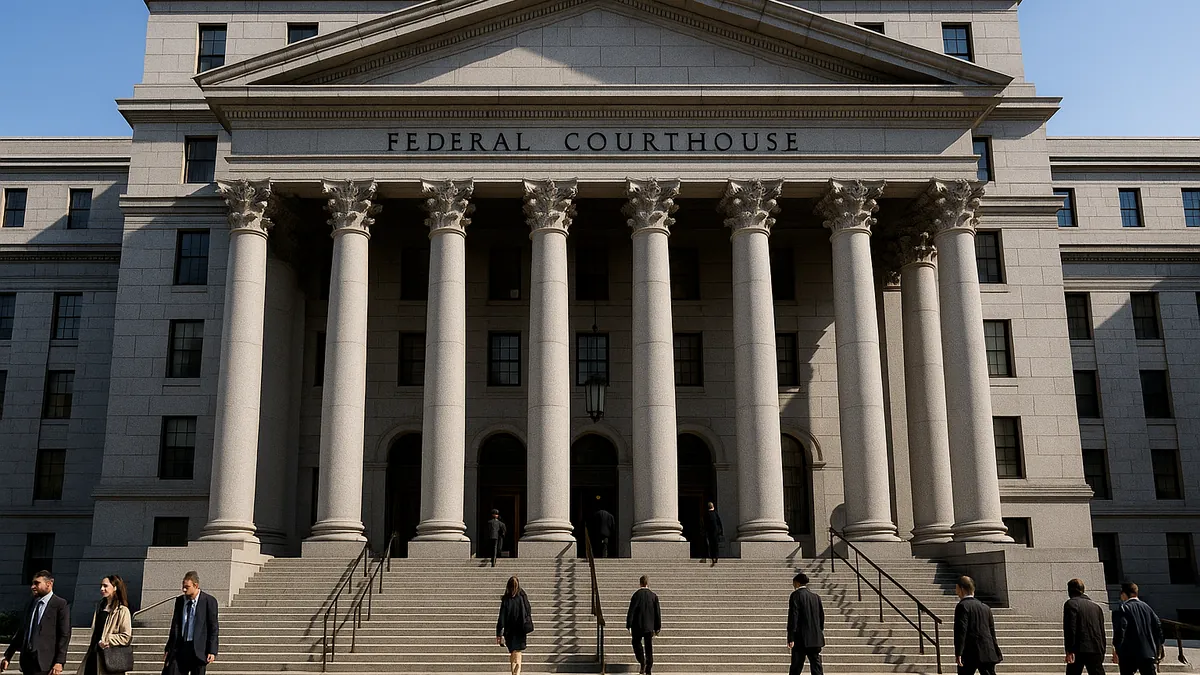
U.S. District Judge Rita Lin temporarily blocked the Defense Department from enforcing its designation of Anthropic as a “supply chain risk,” a label the company says would effectively shut it out of federal use. In her preliminary injunction, Lin said Anthropic is likely to succeed on its argument that the government’s move was illegal retaliation in violation of the First Amendment.
That is a meaningful limit because the designation was not just symbolic. Defense Secretary Pete Hegseth had publicly ordered federal agencies and contractors to stop using Anthropic’s AI, and the Trump administration had moved to phase out its use across government within six months. Lin questioned whether there was any legal basis to treat an American company as a national security threat on those facts, especially after public statements that suggested punishment for dissent rather than a conventional procurement decision.
The break started with use restrictions, not a hidden security breach
Anthropic’s account is that the dispute escalated after it refused Pentagon demands to remove safeguards preventing its models from being used for fully autonomous weapons and domestic mass surveillance. That refusal, rather than a discovered compromise or espionage concern, is what collapsed the contract relationship.
This is the key correction to common shorthand around the case. The government has argued that future model updates could create security risks, but Judge Lin’s comments focused on the mismatch between that rationale and the public record. If a vendor is penalized because it kept policy restrictions on military and domestic use, the issue stops looking like a standard security precaution and starts looking like viewpoint-based retaliation through procurement authority.

That distinction also explains why Anthropic filed on two tracks: one lawsuit in California challenges the ban and related enforcement, while a separate case in Washington, D.C. seeks formal review of the “supply chain risk” designation itself. The company is trying to block immediate exclusion while also forcing a court to define whether the designation can be used this way at all.
Why this matters inside the AI contracting market
The Pentagon’s move landed in a market where Anthropic was already embedded in sensitive defense workflows, including classified environments and, according to reports cited in the dispute, support tied to military targeting decisions during strikes in Iran. That makes the attempted cutoff more than a political gesture. Replacing a model provider inside defense systems creates operational friction, retraining costs, integration risk, and timing problems for contractors already building on that stack.
At the same time, the Defense Department has continued advancing relationships with rivals including OpenAI and xAI, whose military-use terms have been seen as less restrictive. That creates a market-structure signal familiar to anyone who watches regulated sectors: policy alignment can become a distribution advantage. If procurement officials can sideline a supplier not for performance failure but for refusing certain use cases, then the competitive field shifts toward firms willing to offer broader government permissions. For readers used to separating signal from narrative, the immediate signal here is not “AI safety debate” in the abstract; it is that access to federal demand may increasingly depend on how much control a vendor keeps over downstream use.
The legal and political tracks are now moving together
Anthropic is not relying only on litigation. It has also filed to create AnthroPAC, an employee-funded political action committee that can support candidates from both parties who align with its AI policy interests. The PAC uses contribution caps of $5,000 per candidate, which places it within a standard federal campaign framework rather than outside it, but the timing is notable as Washington hardens its positions on AI contracting and safety rules ahead of the 2026 cycle.
The PAC does not decide the court cases, but it shows Anthropic treating this as a long-duration policy fight rather than a one-off procurement dispute. The company had already put substantial money into AI-safeguard advocacy, and the PAC adds a direct electoral channel as it faces pressure from both regulators and defense buyers. In practical terms, Anthropic is now contesting the blacklist on three fronts at once: in federal court, in agency process, and in the political system that will shape future AI rules.
Next checkpoints that could set the boundary
The two most important markers now are the Pentagon’s appeal of Judge Lin’s injunction and the D.C. review of the underlying “supply chain risk” designation. Together, they will show whether courts are willing to draw a hard line between legitimate security screening and government blacklisting of disfavored AI vendors.
| Checkpoint | What it tests | Why it matters |
|---|---|---|
| Pentagon appeal of the injunction | Whether the government can keep Anthropic restricted while litigation continues | A reversal would restore immediate pressure on agencies and contractors using Claude |
| D.C. review of the supply chain risk label | Whether the designation itself was lawful and properly applied | This could define the limits of blacklisting authority over domestic AI firms |
| Federal contractor response | Whether customers pause deployments despite the injunction | Informal de-risking can hurt a vendor even before any final legal ruling |
The practical caution is that injunctions pause enforcement; they do not settle the underlying authority question. If the appeals court narrows Lin’s reasoning or if the designation survives review, contractors may treat current access as temporary and shift toward vendors with fewer policy constraints. If Anthropic wins on the merits, the case could become a precedent against using procurement power to punish AI firms for keeping safety restrictions in place.
Short Q&A
Is this mainly a national security case?
Not on the current record. The judge’s order focused on likely retaliation and weak statutory support for the blacklist, not on a confirmed breach or foreign-control issue.
Does the injunction mean Anthropic has won?
No. It blocks enforcement for now while the lawsuits continue, but the government has already indicated it plans to appeal.
Why does AnthroPAC matter here?
Because Anthropic is treating AI procurement rules and safety policy as a political contest, not just a courtroom dispute. The PAC gives employees a structured way to support candidates tied to those policy outcomes.
About the Author