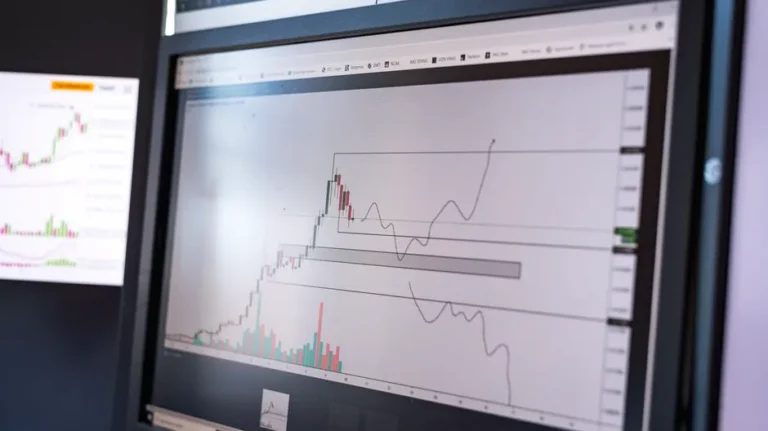

Recent projections indicate that Bitcoin could experience a significant decline, potentially dropping to around $35,000 by December 2026. This forecast raises concerns for investors as it suggests a drastic loss of nearly half its value from its peak of approximately $126,219. Understanding the implications of these predictions is vital for navigating the volatile cryptocurrency market.
What happened
Bitcoin is facing a potential plunge in its price, with forecasts suggesting a drop to around $35,000 by December 2026. This alarming projection highlights the volatility of the cryptocurrency market and the risks associated with investing in Bitcoin.
The anticipated decline represents a staggering loss of nearly 50% from its previous peak, prompting urgent discussions among investors about the future of Bitcoin. As the market reacts to these predictions, the implications for both short-term and long-term holders become increasingly significant.
The timing of this forecast coincides with ongoing fluctuations in Bitcoin’s value, making it a critical moment for investors to reassess their strategies and expectations.
Why it happened
At the core of these projections is the Akiba Cycle Model v2, which utilizes a Monte Carlo simulation to analyze Bitcoin’s price movements based on historical patterns. This model identifies key factors such as drawdowns from peak prices, the time elapsed since halving events, and subsequent recovery multiples.
Historical data reveals a trend of decreasing severity in drawdowns, yet the psychological impact on investors remains significant. The first cycle experienced a 94.1% drawdown, while the projected drawdown for the fifth cycle is estimated at 72.5%. This shift in investor sentiment can lead to panic and impulsive reactions, further complicating market dynamics.
Additionally, a notable change in the behavior of long-term holders has emerged, as many have begun to offload their assets. This behavior diverges from historical trends, where long-term holders typically retained their Bitcoin until market peaks, introducing new volatility into the market.
How it works
The mechanics of Bitcoin’s price movements are influenced by several factors, including halving events, which occur approximately every four years. These events reduce mining rewards and create scarcity, historically leading to price increases. However, the current model indicates that the time from halving to cycle low has significantly extended, now estimated at around 980 days.
This extension raises questions about the traditional correlation between halving events and price recovery. As the market evolves, the relationship between these events and Bitcoin’s price trajectory may not hold as it has in previous cycles.
Understanding these dynamics is crucial for investors as they navigate the complexities of the cryptocurrency market. The interplay between historical patterns, long-term holder behavior, and external economic factors will significantly influence Bitcoin’s future price movements.
What changes
Recent shifts in investor behavior and market dynamics have introduced new challenges for Bitcoin’s price stability. The decline in Bitcoin held by long-term holders to an eight-month low suggests a transition from a singular event-driven market to one characterized by waves of distribution.
This change can create downward pressure on prices, potentially triggering panic selling among investors who fear further declines. The implications of these shifts are profound, as they could lead to increased volatility and uncertainty in the market.

Moreover, broader economic factors, such as macroeconomic trends and regulatory changes, also play a critical role in shaping Bitcoin’s price trajectory. The recent approval of Bitcoin exchange-traded funds (ETFs) has sparked institutional interest, which may counterbalance the selling pressure from long-term holders. However, the sustainability of this interest remains uncertain.


Why it matters next
The implications of Bitcoin’s potential decline are significant for investors. If the price reaches the projected cycle low, it could trigger widespread panic selling, as fear of further declines takes hold. Conversely, if the market can absorb the selling pressure while maintaining investor confidence, a recovery may be possible.
However, the uncertainty surrounding recovery multiples adds another layer of complexity. Historical data suggests that these multiples have diminished over successive cycles, indicating that while Bitcoin may recover, the extent of that recovery could be less dramatic than in the past.
Investors must remain vigilant and adaptable, recognizing that the cryptocurrency market is inherently unpredictable. Monitoring market liquidity, regulatory developments, and macroeconomic indicators will be crucial in verifying these projections and shaping future strategies.
What should investors consider regarding Bitcoin’s price projections?
Investors should consider the potential for increased volatility and the psychological impact of price declines. Understanding the historical patterns and current market dynamics can help investors make informed decisions.
How can external economic factors influence Bitcoin’s price?
External economic factors, such as regulatory changes and macroeconomic trends, can significantly impact Bitcoin’s value. Changes in investor sentiment, particularly from institutional investors, may also play a crucial role in shaping market dynamics.
About the Author